Yellowstone Park Is Closed, Yet We Fantasize about It

Yellowstone Park

We’re all doing it. We’re staying home.

We dress up for Zoom and Google Hangout.  Well, someone does.

We aren’t the blithe folk who spent spring break at Yellowstone Park.  (Every infected person infects two and a half people, so that wasn’t a smart vacation.)

But we would love to go there.  

The last time we went camping (though not at Yellowstone), the horse flies were terrible, and the rocky beach hurt our feet.  And  have you ever splayed yourself across the floor of a tent to keep it from blowing away in a storm? 

Camping isn’t a lot of fun, but it does get you out of the house.

Don’t people need a place to go?

No. Not yet.

Here’s my most productive thought : in the future, city planners will have to widen the sidewalks.

Slowing Down, Staying Home, & Taking Responsibility

Slowing down isn’t the worst thing in the world, but you need to block the reality of COVID-19 to calm down.  And you should keep a diary, however brief the entries.  Before you know it we’ll be reading best-selling Cornoavirus memoirs and diaries!   Might as well write your own. 

What I’ve noticed is that you can really hear the birds.  Various brown species (sparrows, I suppose) chirp and twitter and fly about.  Cats all over the country sit in windows enthralled. (Birds are the equivalent of alluring witches to them.)  Elsewhere, eagles are nesting, and the Sandhill Cranes make their annual migratory stop over the Great Plains. Although I know about the sandhill cranes only from Richard Powers’s novel, The Echo Maker, I’ve always meant to make the trip to Nebraska.

This is the year we have time to travel–but can’t.  There’s nowhere to go, unless you believe you’re immortal.  Drive past the malls and you will see no cars in the parking lots.  McDonald’s drive-thru is open–look at the lines.  

People are getting cranky and curmudgeonly. Women who dared to breed in this dangerous century are boldly writing essays about their exasperation at their offspring, and lashing out at people who expect them to become homeschooling moms.  I don’t know why they couldn’t homeschool:  anyone can do it. Assign an hour of reading a classic ever day, or, even easier, an hour of whatever they want to read. Give them math, if that’s your thing.  Set some ground rules. Play to your strengths.   Take responsibility, damn it!

While women fume about their families, men are writing comic pieces about how they’re driving their wives crazy at home. Men charmingly aver that they’re messy, needy, and demanding.   Yes, it’s funny, and probably true, but isn’t it time they took some responsibility?   These essays are not that cute.  Deal with it or fix it! If you’re messy, embrace it!

You can now “binge” on anything at home:  Netflix, books, food, gourmet coffee.  Once we were “cocooners,” now we are “bingers.” What a culture!  Bizarrely, I am watching less TV.  What is there to watch?  Nothing.  They’re live-streaming Emma–uh huh, if you want to pay $19. 

But we’re all a little distracted now.  Time to join the Slow Living movement!

Reading Marge Piercy’s “Vida” and Notes on Bookstore Closings

Yes, we must all turn to Jane Austen and novels of manners during troubled times.  But must we? 

It doesn’t suit me right now.  And so I recently reread Marge Piercy’s Vida, a fast-paced, vibrant, intense novel about a woman in her thirties who has lived underground for almost ten years after participating in a violent antiwar action.  

Published in 1979, this is one of the best novels I have read about the politics of the ’60s and ’70s. (I also recommend Piercy’s novel Small Changes.) There are political issues at the center of many of Piercy’s books, and the plots are so well-constructed that even the apolitical get hooked.  In case you’re worried about “cultural appropriation,” Piercy has credentials. The 1979 book jacket says: “Ms. Piercy has been a political activist for years–Civil Rights, antiwar groups, SDS and the women’s movement.”

In a way, Piercy is an American Doris Lessing; her heroine Vida Asch is an American Jewish Martha Quest.  This intricate novel goes back and forth between the “present” (the late ’70s) and the ’60s and early ’70s when Vida was an  antiwar activist in SAW (Students Against the War). 

Piercy gives you a look behind-the-scenes at a radical group hectically planning antiwar actions and writing propaganda.   Vida works  by day  as a secretary and by night as a strategist in the SAW office in New York.  Piercy minutely describes a long night at SAW.  Vida, of course, as a woman in the Movement, does everything from opening mail to plotting demonstration tactics and writing pamphlets.  

Tuesday night she bought Chinese takeout on the way to the SAW office from work.  Though the meeting was not till seven-thirty, she had a lot to get done.  Heaped on her desk were requests for antiwar literature, requests for speakers, letters from chapters with problems who wanted a regional representative to visit, donations, clippings, a a threat from Minute Man marked with cross hairs of a rifle sight, a love note from Pelican, and an obscene hate note addressed to Vida Ass and a notice to vacate their loft from the landlord….  The hate mail she shredded by hand and discarded….  She never spoke of how sick it made her feel; not even to Leigh; not even to Lohania, with whom she shared most of her wishes and fears.

The novel opens in the present, with Vida, who is based in L.A.,  on a cross-country trip to a board meeting of a radical group known as the Network.  Although it is dangerous to stop along the way in New York, she is still in love with her husband Leigh, host of a radical news show in New York, and she also longs to see her sister, Natalie, a women’s movement activist.   Arranging the meetings involves elaborate phone calls placed from phone booths, warily spending the night at the apartments of sympathetic liberals who don’t understand the necessity for secrecy, out-of-the way trips on the subway so as not be followed, and clandestine meetings. 

But it is worth it to Vida, who would give almost anything to have her regular life back. Still, she is devastated when she learns that Leigh plans to marry again. 

Piercy’s descriptions of the open relationships of the ’60s and ’70s are accurate, occasionally sensual, but often painful.   Women in the Movement share their men, have sex with their housemates, and sometimes are coerced to have sex with men in the Movement they dislike.  Vida is gorgeous and smart and confident, so she can handle the strain, but she is almost raped at gunpoint by a crazed lover.  Yet she despises the Women’s Movement as bourgeois. Piercy reminds us that the ’60s and ’70s were hardly the Woodstock people are nostalgic for.

Piercy’s heroines tend to be earthy, warm, and sensual, and Vida is no exception.  She cares about her friends, warts and all.  This is one of Piercy’s best, and she is always a vivid writer.  

ARE BOOKSTORES ESSENTIAL BUSINESSES?

The truth is there is more to lockdown than wiping down carts at the grocery store.  There’s washing hands!  Most stores have beeen closed for a couple of weeks.  

At least Barnes and Noble was open.

Two weeks into the lockdown, I would love to go to a bookstore.  I almost agree with James Daunt, the CEO of Barnes and Noble, who, according to Publishers Weekly, has said that books and bookstores should be considered essential businesses right now. Daunt, who, in addition to being CEO of B&N, is  the founder of Daunt Books in the UK and the CEO of Waterstones in the UK (a bookstore I love!), is thinking in terms of business, but as a consumer/book lover, I believe that books are good for the soul and spirit. And examining the books themselves, feeling the heft and seeing the design, is an important part of book-buying.

Mind you, we have plenty of books.   But when I learned that  all the bookstores will be closed  by 10 tonight for an indefinite period, I wished I could rush out and buy one more book. 

The end of an era?

Pacing, Community Gardens, & Breathing Deeply in a Supine Position

I paced back and forth outside.   We’re not on strict lockdown, but sometimes pacing is as good as a walk.  I needed a breath of fresh air.  And though it is not particularly nice out, I enjoyed  looking at the brown outlines of last year’s gardens.

I wondered, Will the community gardens get planted this year?  The community garden in our neighborhood is particularly beautiful, curated by skilled gardeners.  The plots are more than six feet apart (I think),  but I am not sure people will risk it. 

I am slightly less claustrophobic than I was a week ago. Perhaps I feel slightly more accepting because I’m reading fewer news articles.  One headline informed me that fundamentalist Jerry Falwell Jr. is reopening Liberty University during the pandemic.  I didn’t read the article.  That’s about what I would expect. 

I have read articles about people running marathons on their balconies.  Running is the great new “social distancing” excercise, I’ve read.  Apparently you just run through the germs!  Actually, any exercise is a great de-stressor.  Run, walk, lift weights, etc.  

I wonder how running on a balcony works.  Even taking a walk inside the house involves constant turning as you walk around furniture.  But there are always old-time exercises, like the ones we did in gym.  I’m partial to the cooldowns where you just lie on the floor and breathe.

Keep healthy!  Go outside when you can.  And I hope you’re all keeping calm, or as calm as possible.

Our Bookshelves Don’t Look Like an Instagram Photo

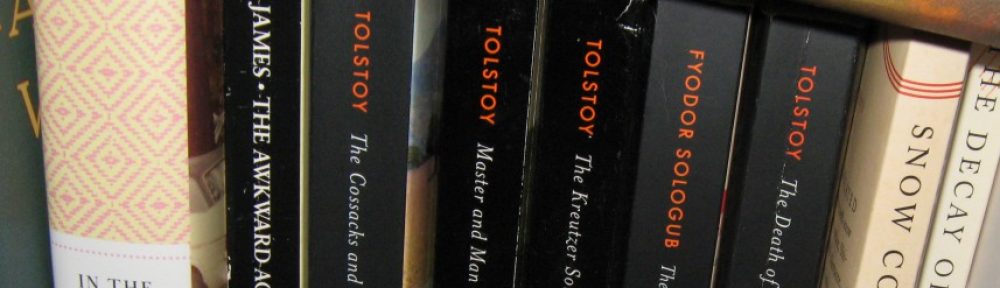
Half-jokingly, I suggested to Mr. Nemo that we use our time at home (government-prescribed, but necessary) to turn our bookcases into a Bookstagram pic.

“What’s Bookstagram?”

“Mostly pictures of books.”  I don’t quite get it myself, and my password is long-lost, but it seems to be a part of Instagram where  readers photograph their books as adorably as possible, and if they are adorable, too, they post pictures of themselves.  (I have read that paid models do some of this”Bookstagramming” under feigned names.)

Sometimes the shelves are color-coded.  Yes, they put all their red books together, orange books together etc. What a nightmare!  Others organize by collection. So we decided to put our Library of America books together.

I love sorting books, and it is easy to find LOAs, because they have black covers.  Still, the effect wasn’t quite as I hoped.  It looked too much like a bookstore, nothing like Bookstagram.  And the next day I awoke to find Mr. Nemo  packing up more of our books to make more room for whatever our next collection might be. 

With quavering voice, I said, “But what if I want to read Updike or Undset?  I’ll never find them.”

All over the country, I imagine people converting their energy into unnecessary projects like this one.  And someone  in Salt Lake City or Champaign-Urbana is disconcerted because her favorite books are now stored in that closet that doesn’t open unless you roll up the rug and then wrench the stuck door.

All right, this really happened, but it is also kind of a joke.

Stay well!  And here are links to two interesting articles. 

Five Massive SFF Books to Read While You’re Social-Distancing

Thucydides and the plague of Athens – what it can teach us now

Not Quite in Lockdown: Astronauts & Booksellers

We’re not in lockdown, but we’ve been asked to stay home except for necessary trips to the store, pharmacy, etc. We’re  despondent. We wish they could have rolled this out weeks ago, one thing at a time.  But we keep telling ourselves, Buck up!  And thanking our blessings for what we’ve got.

I keep asking myself, What would my mother do?  And though she was terrified of storms, she survived floods and tornadoes. Her church was destroyed by a tornado and her finished basement was afloat with debris during a flood.  

This is what we’ve got:  lockdown, or not quite lockdown.  And we take hope where we find it.  Have you been reading about bookstores with curbside service, or book delivery by bicycle?  Wouldn’t the latter be fun?

Here is the best thing I’ve read all day:  Astronaut Scott Kelly’s essay, “I spent a year in space. I know something about isolation.”

It begins,

Being stuck at home can be challenging. When I lived on the International Space Station for nearly a year, it wasn’t easy. When I went to sleep, I was at work. When I woke up, I was still at work. Flying in space is probably the only job you absolutely cannot quit.

But I learned some things during my time up there that I’d like to share — because they are about to come in handy again, as we all confine ourselves at home to help stop the spread of the coronavirus. Here are a few tips on living in isolation, from someone who has been there.

Stay safe and calm!

And good wishes from Thornfield Hall.

Slamming the Doors of Libraries

You were there when the library closed, long a dream of many conservative Republicans.  You stood in the lobby, waiting for a friend, not daring to touch the books–you, the venturesome and fearless. The very few people in the  non-fiction section smiled from afar.  Inevitably, they were alone.  Perhaps anything was better than being alone.  

And so the doors slammed.  You hadn’t expected it.  You had received an official email explaining the library would stay stay open to serve the community as long as it was safe.

And so, you fantasized, you would take trip to the university library so you could check out some obscure books you would need in the next few weeks.

Slam. It closed, too. 

Thank God you have your own books.

Where do the bums go, as we used to call the homeless?  They sat at the library all day,  all winter long, except when the security guard kicked them out. Then they sat in a little park.

Meanwhile you begged, pleaded, with relatives to stay home from work.  Nobody took it seriously.  Or if they did, they hadn’t read about Italy and didn’t take it seriously enough.  “Please read this.”  You sent links.

Then they came home, one by one.  They came home with computers, files, and phones. They set up home offices in whatever corner they had.  

In a country where stores are never closed–not even on holidays–people are petrified.

And bored.  So very bored.

“Welcome to the occupation,” as R.E.M sang back in the ’80s (only that was about policy in Central America).

Only now it’s germs.

Chic Home-Office Wear & Mary E. Wilkins Freeman’s “A New England Nun”

IT IS PAJAMA DAY # 4 IN THE AGE OF COVID-19!

 It’s a pajama day, because I am doing my best to relax in this jittery time–but today I exchanged my soft jeans for a slightly more upscale style.  

I have an extensive wardrobe of pajama-type garments. I do not have the 1930s beachwear pajamas jumpsuits (above left), but if you can sew, perhaps you can make your own. Today I dragged a black sweater and forgotten stretch pants (just like the ones in the 1961 Sears catalogue above) from the bottom of a trunk.  If you have not Marie Kondo-ed your house, you wil find rummaging in an old trunk the equivalent of shopping. The malls are closed, so what else?   And it is the perfect time to be super-casual, because you’ll find your co-workers are equally blasé in their home offices or crowded family-filled houses. 

WHAT ARE YOU READING?  Maybe P. G. Wodehouse? Or Carol Shields?  I recommend Mary E. Wilkins Freeman’s enjoyable book,  A New England Nun and Other Stories.  This has gathered dust on my shelves,  possibly because Freeman (1852-1930) used to be dismissed as a “regional” writer.  Yes, her books are set in New England, but why is that regional?  

Freeman’s unshowy prose is effortlessly graceful and her plots absorbing. Every word matters:  no sentence is a throw-away.  She is known for portraits of independent women in New England villages and small towns:  their social positions vary, but everyone has a crisis to surmount.

In one of her most famous stories, “A New England Nun,” the heroine, Louisa Ellis, is very pretty and gentle.  Her long-distance fiancé, Joe Doggett, has worked 14 years to make his fortune in Australia.   Now Joe is back, and she is bewildered.

From the first paragraph, Freeman describes Louisa’s quiet life through nature and the objects around her. 

It was late in the afternoon, and the light was waning.  There was a difference in the look of the tree shadows out in the yard….  There seemed to be a gentle stir arising over everything for the mere sake of subsidence–a very premonition of rest and hush and night.”

Louisa is happy drinking her solitary tea and listening to her canary chirp. She is not looking forward to a visit from Joe. What strangely disconcerts her is his hugeness:  he seems to fill up the room, and brings in dust from the outdoors. Will these two really marry?

In “A Moral Exigency,” the heroine, Eunice, refuses to marry Mr. Wilson, a widower with four children.   Her father insists it is “an opportunity,” but Eunice says, “I don’t think I should care for that kind of opportunity.”  It’s not that she’s cold:  she loves another man.  But duty can get in the way of affection. 

In “A Mistaken Charity,” two old women are dragged from their hovel to live in an old people’s home. It’s not a poorhouse out of Dickens, but the sisters miss their hovel.  What unfolds reminds me of an episode of Grace and Frankie.  Did the TV writers read this story?

I also very much enjoyed The Jamesons, a comic novella about a small New England town turned topsy-turvy when the Jamesons move in.  Mrs Jameson is domineering and insists on reading Browning aloud for hours. Very, very funny–very different from the stories.

WHAT ARE YOUR READING RECOMMENDATIONS? 

Remember Talk Talk?

I sometimes pretend the last concert I went to was by Talk Talk.  I may have seen Bob Dylan more recently, but the former makes a better story.

Anyway, here’s a video of Talk Talk playing “It’s My Life.” An article online says. “The video shows Mark Hollis at the London Zoo in Regent’s Park, but he’s not singing – his mouth is digitally obscured as he stands among the exhibits. The rest of the footage came from the BBC nature series Life on Earth.”  The song doesn’t seem connected to the video, but it makes me happy to see zebras and flamingos.

Here’s to the wild animals!  


Living in Doris Lessing’s World: A Pandemic Unforeseen

I get it.  I don’t want to, but I do.  Men think they’re invincible. How wonderful that must be.

There is still a crazed notion here that COVID-19 is just the flu.  Everything I’ve read contradicts this; everything you’ve read contradicts this. Since the outbreak here can be traced to a small group of vacationers returning from a cruise, people assume it is contained. They are not reading enough newspapers, whereas I’m at the point where I can make charts with colored pins and sticky notes, like  Martha Quest and  Mark in Doris Lessing’s The Four-Gated City.  But unlike the narrator of her apocalyptic novel, Memoirs of a Survivor, I cannot gather information from people on the street.

It’s actually unclear to me whether it is safe to take walks. There are so many gaps in these articles.   When we went out yesterday for a walk, I broke all rules of etiquette and crossed the street if I saw a person coming.  Mind you, hardly anybody was out.  My husband is so stubborn that he mocked a person who was walking in the street.  Frankly, that was the smartest person I saw all day.

Infectious disease experts are saying, “Work at home,” but not all employers have approved this homework situation (yet).  We’re a little behind here, just beginning to take it seriously.  The universities, schools, movie theaters, and libraries are closed.  The mayor declared  a city emergency and squelched the chutzpah of a belligerent group who had refused to cancel the St. Patrick’s Day parade. 

Mind you, I’m not panicking. We are all in a state of derealization. That’s a joke, but it’s also true you can’t take it all in.  I pay close attention to the details in the op/ed pieces by experts, but am more critical of journalists’ accounts of what’s unfolding.  Sometimes there is a note of hysteria, for which I cannot blame them. 

But why, oh why, didn’t the Senate meet this weekend to approve the relief bill drafted by the House?   Isn’t this a National Emergency? 

But two things we know for sure:  keep on washing your hands and avoid the crowd.