Jane Gaskell’s “The Atlan Saga”: The Perils of Cija

In the late 1970s, Ms. magazine published a glowing review of the unknown English writer Jane Gaskell’s five-book fantasy series, The Atlan Saga (first published in the U.S. in 1977). The reviewer claimed that the series was notable:  first, because Gaskell was one of the few women who had broken into SF/fantasy, and second, because she turned the fairy-tale princess stereotype into a believable, independent woman character.  The latter is true to an extent, but Cija is no superwoman: she needs all the friends she can get, whether they be good or evil, as she confronts monsters, escapes from a closely-guarded brothel, or manages to survive the plots of a sinister High Priest.

The Atlan books have their roots in pulp fiction, though they are what I call chic pulp. The dialogue is very smart and funny, and the action scenes leave you breathless, as the heroine jumps from danger to danger, sometimes escaping, sometimes saved by others. Cija is often depressed, with good reason. She fights monsters, loses friends, and is betrayed. But Gaskell’s style is charming and often lyrical, and though it can turn purple in a second – and then she’s poetic again! – it is great fun to read. These are comfort books.

Today I’m writing about the first two books, The Serpent and The Dragon. The other three are Atlan, The City, and Some Summer Lands.

In The Serpent, the first book in the series, set in ancient South America, we learn about Cija’s education. Raised in a tower, Princess Cija (pronounced Key-a), has been instructed by her mother the Dictatress that men are extinct. (The Dictatress and Cija are goddesses as well as royalty.)  Bored in the tower, she secretly writes a diary:  she stole an account book from her nurse. One day she is sitting on a ledge when she has an inkling that her mother might have lied about men.

 Imagine Cija’s surprise when Zerd, the general of an invading army, scales the tower and has a chat with her.  She thinks he is an exceptionally ugly, big woman, with blue skin and scales.  From the beginning, he finds her funny.  And soon she discovers he is one of the most powerful men in the world, and that she is about to be taken hostage by him, so the army in her mother’s conquered country doesn’t retaliate.  Cija is furious. How can she, a goddess, be a hostage?

Here is Cija’s diary summing-up of her conversation with her mother.

“But men are extinct!  Do you mean that there is one alive–a real man–an atavistic throwback or something?”  Was wildly, wildly excited.  Have also always wanted to see a brontosaurus, which Snedde told me are nearly as extinct as men.

“Darling,” said the Dictatress gravely, “for reasons of our own your nurses and I, purely in your own interests of course, have misled you as to the facts in the world outside your tower….  As many men exist as women.”

From the tower to the military camp, grumpy Cija submits to being a hostage, and travels with her nurse, Ooldra, who informs Cija that her mission is to seduce and kill Zerd.  Of course Cija is not athletic or flirtatious, and her background has not prepared her for either task. She spends a lot of time disguised as a boy, waiting for a chance.  Zerd knows exactly who she is. Meanwhile. a blond hostage named Smahil is attracted to Cija and looks after her.  

In the second book, The Dragon, Cija has matured:  her travels on the road, and unwanted sex with the ambitious Smahil, whose advances she tried to resist, have made her more sophisticated and warier of men. But this is also the book where Zerd woos her and (kind of) wins her. It is a case of the god-like general paying attention to a mousy young woman.

Zerd and Cija are traveling together to the capital, and stop to spend the night “where the forests are thicker and more like jungle, with fantastic undergrowth, difficult, ridged ground and conical boulders difficult to find a way between.” Cija wakes up in pain and cannot move her leg. She screams at Zerd to help her, and they see a gigantic snake intently swallowing her leg. It also has thousands of little teeth so he can’t rip the snake off her leg without tearing her leg off. He kills the snake with an axe, hitting it two inches below her foot, and then he continues to hack up the snake during its death agonies. Cija screams with pain, but Zerd saves her life.

“Oh thank you, thank you. No one has ever been so wonderful to me. You have saved my life so many times…”

So you can see, she’s in a bind about Zerd. He is the enemy of her people. He can be romantic, but she doesn’t actually want sex with anyone. And she has discovered that Smahil is her half-brother – the son of her father and Olldra the nurse – so she has an excuse to avoid him. Smahil continues to be keen: neither man cares what she is keen on.

I do empathize with Cija. In the course of the saga, much happens to humble her. She survives her flight from vigilante priests, saved from them by the High Priest at court, riots, has slipped a knife to a criminal so he can free an Atlan priest from jail, and fought on the side of bandits.

So does Cija have PTSD? Yes, that’s what we would say now. And she endures more and more as the book goes on.

I love these books, and will try to write something about the last three soon.

These are fabulous reads. I highly recommend them.

Monstrous Love: Rachel Ingalls’ “Mrs. Caliban”

Monsters in literature are often sympathetic. In Apuleius’ charming comic novel, The Golden Ass, the hero, Lucius, is transformed into an ass. Hubris was his crime: he spied on a witch and borrowed one of her unguents. Lucius is hilarious, but it’s hard work being an ass. Fortunately, he recovers his human form.

And there is Mary Shelley’s famous novel, Frankenstein, in which mad Dr. Frankenstein creates a sentient monster. Tragically, Frankenstein botched the job, and the sympathetic monster’s appearance terrifies human beings. There’s a Gothic Wuthering Heights feeling to this novel. Heathcliff became a monster after he was rejected by Catherine.

But best of all is Rachel Ingalls’ short novel, Mrs. Caliban, the story of a housewife who falls in love with a sea monster. Lauded by critics and readers, this book has gone in and out of print since its publication in 1984. 

Left to herself, ignored by her husband, Dorothy is one of the saddest housewives ever. Her son Scotty died, her beloved dog was run over by a car, and her husband is having an affair. . Is it any wonder she begins to hear voices on the radio? “Don’t worry, Dorothy, you’ll have another baby all right. You have to relax and stop worrying.”  But the most important radio transmission is a warning that a monster has escaped from a lab after killing two scientists. 

Is Dorothy hallucinating? She is frightened. But when the monster shows up in her kitchen and explains that he was tortured in the lab, she feeds him celery from her hand and learns that His name is Larry. Dorothy and Larry become lovers.

But it is Ingalls’ spare writing, combined with quirkiness, that makes this a classic.  There are other monsters in this book. At the supermarket, Dorothy and her best friend Estelle “were comparing recipes for meat sauce when a figure like a huge doll came trotting down the aisles. It was female, dressed in a sort of drum-majorette’s outfit, and carried a tray with a band that went around the neck. Long curls brushed out from under a species of military hat composed of metallic-painted cardboard, red glitter, and side rosettes.”

This doll-like figure carries a tray of cheese samples and aggressively asks them to try and buy them. Both make excuses. And after she leaves, another doll-like figure with cheese approaches them, and then a rather scary doll-like figure. These doll-like women represent the mechanical forces of female desperation and sexuality. Both Dorothy and Estelle have tried to not to buy into doll-like live

You can interpret the book two ways. Dorothy may have been driven mad by her sadness. That is the sophisticated reading. But my preferred reading is that Dorothy meets the monster.

Then things go drastically awry after a while, and we must ask, Who is the monster?  Perhaps Dorothy is the monster.  She discovers more and more personal betrayals. She can’t take it anymore.

I have read this odd novel several times, and each time I notice different details. One of the most fascinating novels of the 20th century, it is well worth reading.

Two Short Novels by Colette:  “Break of Day” & “Duo”

I am fascinated by Colette’s bitterswette novels, Break of Day, The Vagabond, and Duo.  Colette is unsentimental, lyrical and playful, yet somehow this time around I’m disturbed by the heroines’ bravado and rejection of love. 

In my twenties when I first read Colette, I foolishly thought I was Colette. Not literally, barely figuratively, I identified with her courageous heroines, who were much more experienced than I and worked respectively as a music hall artist, a writer, and a costume designer.  (The reader’s moxie and power of imagination awes me!)  

Then in my thirties and forties, I admired the heroines’ strength and independence and pitied their loneliness, but the sentences are so graceful that I also felt joy. Still later (now), as a Woman of a Certain Age, I  am swept away by her style and subtlety but grieve for the characters’ mistakes, but perhaps they’re not mistakes. The decisions they make are painful.  And yet when I first read these books when I was very young, I approved of their recklessness and independence. Freedom, liberty, and equality! That was the dream.

I recently reread two of her short novels, Break of Day and Duo, which are so different in style they might have been written by different writers. Break of Day is an autofiction masterpiece, a melange of narrative and letters; Duo is very slight, a piece about the destruction of a marriage, later adapted as a play.

In the masterpiece Break of Day, narrated by Colette in her fifties, she describes summer days by the sea – dazzling sunrises and sunsets – and rollicking picnics with her artist friends.  She also quotes extracts from her late mother Sido’s letters, and strives to emulate Sido in middle age.  

Here is one of her many homages to Sido:

Whenever I feel myself inferior to everything about me, threatened by my own mediocrity, frightened by the discover that a muscle is losing its strength, I can still hold up my head and say, ‘I am the daughter of the woman who wrote that letter…

And there is love.  There is always a love affair in Colette’s novels.  Colette herself had many affairs with men and women, and was married three times.  In Break of Day, Colette’s neighbor, Vail, who is 35 to her 50, spends whole days with her and is obviously in love.  They swim together, she makes lunch for him, and he watches her mulch the garden and complains about her ruining her hands. She is too experienced to think an affair with him would work.  She doesn’t care about the age difference, but feels that it might be time to think about something besides love.  In real life, she was 52 when she fell in love with a 35-year-old Jewish bachelor, Maurice Goudeket, and they did marry. Later, during World War II, she rescued Maurice from a concentration camp by writing for Nazi publications. Obviously, this was a case of doing anything for love.

One of the most striking aspects of this novel is the narrator’s choice to call herself Colette.  She does not bother to change her name in Break of Day; she called the narrator Renee in The Vagabond. But she explains that readers should not mistake the character Colette in Break of Day for Colette herself. “Am I writing about myself? Have patience, that is my model.”

Duo, a novella about a couple in crisis, is written in the third person, much of it in dialogue. This short examination of the destruction of a marriage reads like a play, and was later adapted as a play.

Alice and Michel are on vacation on their farm.   Michel, a businessman who brokers theater deals, is in financial trouble. He is deeply in love with his wife Alice, a costume designer, but won’t burden her with worries about the farm. Everything changes when Michel finds a love letter to Alice from his business partner.

Colette describes the hell of a breach of trust in marriage, and Michel’s sleeplessness and constant interrogation of Alice. But whatever palliative half-truth she tells, he is in terrible pain. And Alice is cold: she is exhausted and doesn’t care that much after a while.  It seems entirely trivial to her. And, oddly, the cook empathizes with her: she shows Alice the bruises and cuts her husband inflicts on her. Their situations are different but they comfort each other..

The translation is everything here:  I started reading an awkward translation by Margaret Crosland and almost put away the book. Then I found Frederick A. Blossom’s elegant translation – it’s very stagy, but that’s the nature of the piece.

Much of Colette’s work is untranslated. Should I learn French so I can read her other work? Is there a website somewhere with English translations of unknown books or essays?

Safety’s Just Another Word…

The new neighbor from Rhode Island or New Hampshire – a two-name state anyway – gushes about the charms of our city. 

 “I love it here. It’s so quaint. And as long as I’ve got Target and Starbucks I’m okay,” she confesses.  “And It’s so safe here.  You have no idea what that means to us.”

Don’t I? “It is a nice neighborhood. And I love Target and Starbucks too.”  

I don’t address the safety issues.  Poor soul! It’s not Nirvana. But one thing we can all agree on is that we want to be safe.

There are degrees of safety in our neighborhood.  You don’t have to pack heat when you take a walk. (“Lay down your weapon NOW.” – Jack Bauer in 24, Brenda in The Closer)  Most of the neighborhood streets are safe, but pedestrians need to take a few detours.  

Stop and turn around in the middle of the block on X Street because those lively people in the church parking lot are drug dealers.  You say, I have a wild imagination. But in fact, I’m NOT wrong.  You intuit degrees of safety in a city, with all a city’s problems. 

Pedestrians beware! There is an extremely dangerous intersection at the corners of Audubon and Turkey Vulture Streets. A small parking lot on this corner has NO barriers, no curbs, NOTHING between the parking lot and the sidewalk. Some geniuses park right on the sidewalk!

I don’t mean it’s NOT safe here, but it has a city’s advantages and disadvantages. Grew up in a small town, then moved to another idyllic small town – in retrospect I wish I had stayed.  But it has been my fate to move to the city for the sake of work and family. That’s life in the 21st century.

Losing My Scarf, Then My Mind

It was another day at the library… a perfect day to lose mittens or your scarf.  I have a complicated winter ensemble, and often mislay bits of my gear.

I approached Captain Nemo, waving my scarf.  “Found it!”

A stranger swiveled in the chair and said fussily,  “I don’t know who you’re looking for.”  

“Oh, sorry, your coat is like his.”  I made the Namaste sign and scooted. 

It was embarrassing, but sort of funny.  I wandered around till I found Captain Nemo.  I didn’t tell him, because he would have taken me immediately to an optician.

I already have three pairs of glasses, with almost identical prescriptions. On some days I see better out of one pair than another.  One pair is wire-rimmed (retro-Paul Kantnor, Jefferson Airplane). One pair is tortoiseshell (retro-nerd).  The other pair has blue frames (retro-Prue).   

Remember the big glasses of the ’90s?  I have an enormous tortoiseshell pair. I keep them in case they come back into style… which will be never.

The frames of glasses keep changing size.  They were small in the early 2000s, so small that during a bike ride a bee flew under my specs and stung me.  The 2010s were a blur to me, ha ha. Perhaps it was a time of medium glasses.  Now big glasses are back.  Mine are not that big, but that’s because I couldn’t see what they looked like without my other glasses on top of the ones I was trying on… 

At least I don’t lose my glasses.  Well, because of the rotating system I sometimes do.  It makes me feel secure to have three pairs…

Enough glasses at last!

The Romance of Renée and Big Noodle: Colette’s “The Vagabond”

In France in the first quarter of the 20th century, Colette developed a huge fan base for her witty, lyrical novels, memoirs, and short stories. Marcel Proust, Andre Gide, and Jean Cocteau admired her work. Readers raced to the bookstores in Paris to buy the latest Colette after the success of the Claudine series: Claudine at School, Claudine in Paris, Claudine Married, and Claudine and Annie: Perhaps the race to the bookstores to get the latest Twilight book was comparable to the Claudine fandom.

Although some critics considered Colette’s work scandalous -and there is plenty of sexual innuendo – Colette wrote and spiced up Claudine at the behest of her first husband, Willy, who ran a ghostwriting “factory.”  The books were (loosely) based on notebooks she had written in her teens. The series was published under Willy’s name, and after their divorce she sued for the copyright.

This series was so popular that there was Claudine “merch”: notebooks, sailor suits, dolls, and haircuts; Colette even did a touring act as Claudine. But Colette’s more discerning fans admire her subsequent, more sophisticated books. Some are lyrical, witty romance novels with a twist, because not every Colette heroine wants to marry – or autobiographical novels based on her own life and loves.  Some characters are heterosexual, others gay or bisexual.  In The Blue Lantern, Colette writes fluently about old age, as, crippled by arthritis, she lounges on her couch under “the blue lantern,” a lamp with a writerly blue stationery lampshade. (The Blue Lantern was her famous memoir of old age.)

But let us get on to The Vagabond, an exquisite autobiographical novel often acclaimed as her masterpiece. It can be read again and again with pleasure. (I’m on my second copy.)  Enid McLeod’s graceful translation was published in 1955 and is still in print (FSG). A new translation was recently published by Oxford World Classics.

Based on Colette’s career as a music hall performer, this lively novel is full of humor and charm.  In the following passage, she describes what it’s like to be backstage in a flimsy costume in a cold, unheated theater.

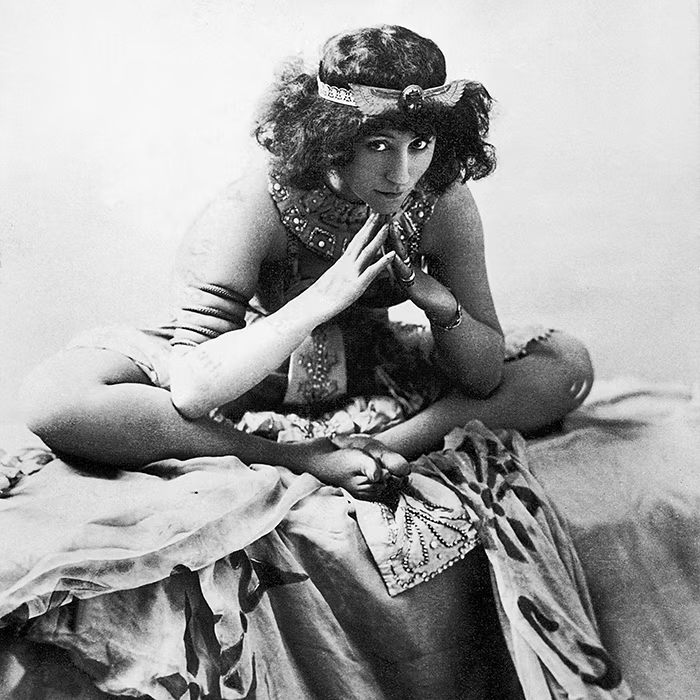
Colette as music hall performer

It’s absolutely freezing in here! I rub my hands together, grey with cold under the wet white which is beginning to crack. …on Saturdays here they rely on the high-spirited popular audience, rowdy and slightly drunk, to warm the auditorium.

Colette wrote The Vagabond while on a music hall tour: she wrote on trains, at depots, and between acts. And it was on tour that Colette met Auguste Heriot, the rich heir of a department store owner. He wooed her with flowers in her dressing room, and was the model for Big Noodle in The Vagabond. Big Noodle, who falls in love with Renée, Colette’s fictional counterpart, also brings flowers to Renée’s dressing room. The difference is that Auguste was much younger than Colette, while Big Noodle and Renée are the same age, 33.

Like Colette, the divorced narrator Renée becomes a music hall performer.  Like Colette, Renée has no interest in her gentlemen fans. But one day while chasing her dog, Fossette, in a park, she hears heavy breathing behind her. When she turns around, she sees Big Noodle, who, despite her rejection of his advances, is determined to win her affections.  He is sweet, but is not the brightest of men.  In the following passage, we think of Apollo huffing and puffing as he stalks/chases the nymph Daphne

“I followed you… I was careful to run at the same pace as you so that you shouldn’t hear my steps.  It’s quite simple. “

Yes, it’s quite simple.  But it had to be thought of.  For my part I shouldn’t have thought of it.  Provoked and imprudent, a nymph-like brutality took possession of me and I laughed full in his face, defying him…

Renée is serious about her wish for independence. But was Colette? Well, she once laughed and said that her heroines were more courageous than she was. This is more or less like saying, “Do as I say, not as I do.”   

As for Colette, she married three times.  Between marriages, she had boyfriends and girlfriends.  But her combination of humor, witty dialogue, contemplation, and poetic sketches of nature make her one of my favorite writers of the 20th century (and now the 21st).

A Year in Books 2025, Part II

Happy New Year!  Let’s hope 2026 will be a terrific reading year! 

Here is Part II of my Year in Books, July to December.

July 2025

Carol Shields’ The Box Garden. Carol Shields’ gentle novel, The Box Garden, is one of my favorite books. She breezily dissects family problems in the context of a domestic comedy.  Charleen, a poet and part-time assistant editor at a botanical journal, attends her eccentric 70-year-old mother’s wedding in Toronto, accompanied by her dentist boyfriend, whom friends consider unhip. Her ex-husband lives in a commune near Toronto: she intends to track him down. And she has a crush on her penpal, a man whose philosophical essay on grass was rejected by the botanical journal.

Charming, sweet, and funny.

August 2025

Set in the 16th century, Allegra Goodman’s stunning historical novel, Isola, is part coming-of-age story, part survival story. The heroine, Marguerite de la Rocque, orphaned at the age of three, inherited a fortune and lives comfortably with her nurse. Then her cruel guardian, Jean-François Roberval, squanders all her money and sells the house. He insists that Marguerite and her nurse accompany him on a sea voyage to New France (Canada). At sea, in sight of the shores of Canada, he dumps Marguerite, her elderly nurse, and his secretary on an uninhabited island. Based on real events, this novel is an elegantly-written page-turner.

September 2025

Fanny Burney’s 941-page novel Cecilia, her masterpiece, was one of the pleasures of the year.  Burney (1752-1840) influenced Jane Austen, who took the title, Pride and Prejudice, from a passage in Cecilia. Each of Burney’s lively sentences is enchanting, the narrative is lively, and the saucy dialogue made me laugh. Burney portrays rich people living on the edge of bankruptcy, glitzy, decadent parties, and suitors who want to marry her for money. Cecilia is not a typical heroine:  she is not interested in marriage.  She fobs off the suitors!  What next?

October 2025

Jean Rhys’s After Leaving Mr. Mackenzie is a novel of desperation. Rhys’s style is so spare that it complements the heroine’s bare, squalid life. Julia, an ex-mistress, doesn’t know how to survive on her own. . Her beauty is waning, she has no job, she seldom leaves her hotel room, and in the evening drinks a little too much in cafes, often with strange men.   After Mr. Mackenzie’s lawyer informs her that there will be no more checks, she teeters on the edge of prostitution. What can she do?

November 2025

Joseph Conrad’s short, dense political novel, The Secret Agent, is a spy story, but also bares the skeleton of the feeble nuclear family.  Mr. Verloc runs a porn shop as a cover for his anarchist meetings and his second job as a secret agent. His young wife, Winnie, helps with the shop and takes care of her mentally disabled brother Stevie. Surprisingly, Mr. Verloc finds a way to use Stevie:  he becomes the unknowing agent of Mr. Verloc, after Privy Councilor Wurmt of the Russian embassy orders Verloc to commit a radical action to rouse the public against anarchists.  Beware of the twisted plots of double agents!

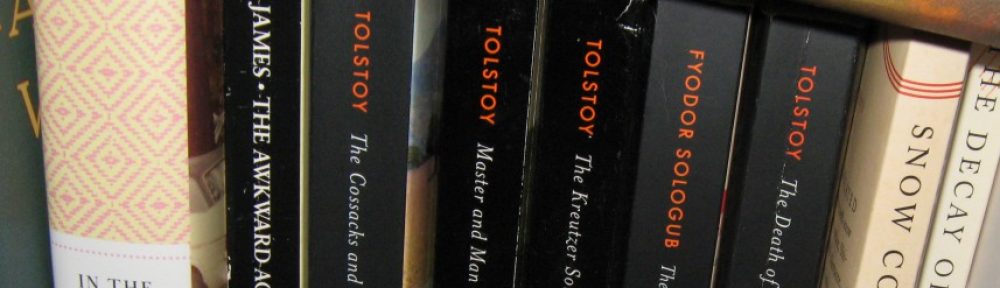
In Henry James’ convoluted novel, The Awkward Age, there is little action.  Much of the plot unfolds in oblique dialogue.  At her salon, Mrs. Brookenham sighs over the fate of her attractive daughter, Nanda, who knows too much for a marriageable woman, and, as a duchess says to Mrs. Brookenham, will drive away eligible men.  Mrs. Brookenham is ambivalent toward her daughter: she is competing with Nanda for the admiration of her friend, Mr. Vandenbank.  But nothing goes terribly wrong until Mr. Longdon, a stodgy man in his fifties, arrives in London to research the history of Lady Julia, who was Mrs. Brookenham’s late mother.

A compelling novel, written in Henry James’ incomparable, convoluted style.

Happy reading! See ya next yea!

A Riveting Biography: “Marcus Aurelius Stoic Philosopher”

“Accept humbly: let go easily.” – Marcus Aurelius, Meditations, 8.33 (Penguin)

The Roman emperor Marcus Aurelius (121- 180 CE), son of Domitia Lucilla and adoptive son of Emperor Antoninus Pius, was a Stoic philosopher best-remembered as the author of Meditations. This popular book is often called “the best self-help book.” Marcus Aurelius’ stoic sayings can be short and pithy; sagacious and complex; or even lessons in etiquette and diplomacy. 

Though I’m not a great fan of Meditations, I was fascinated by Donald J. Robertson’s lively biography, Marcus Aurelius Stoic Philosopher. This short, riveting book is crammed with action, political maneuvering, warfare, thoughts on the advantages of mediation with the enemy, decadent co-emperors, the solace of philosophy, and the spread of the plague that decimated Rome.

The truth is, Marcus Aurelius was a reluctant emperor. He preferred philosophy to politics. Nonetheless, he was well-prepared for the job: he was fast-tracked through several high-level political offices after the emperor Antoninus, his adoptive father, named Marcus his heir. (Antoninus’ predecessor, Hadrian, had also taken an interest in Marcus.)

Marcus’ stoicism directed his political decisions. Philosophy had intrigued him since he was a boy. His mother, Lucilla, was his role model:  she was gentle, calm, well-spoken, and in letters he called her his “little mother.” She directed his education: the curriculum was divided into two parts, Greek rhetoric and philosophy, the former for the sake of public speaking and the law, the latter for critical thinking and pursuing wisdom. Sometimes Marcus managed to turn a negative into a a positive. No wonder Meditations is so popular.

Marcus Aurelius was popular with the Roman people. But he had to work with, and cover for, his decadent co-emperor, Lucius Verus, a slacker who, even in wartime, loitered and partied at luxurious resorts before arriving late to the scene of war. Later, after Lucius Verus’ death, Marcus Aurelius was full of grief when he had to name his son, Commodus, co-emperor. Commodus was another party boy, very like Lucius Verus, but the people did not know that. One can only hope poor Marcus’ meditations helped him. In 190 CE, Marcus died of what was probably the plague.

Meditations is now on my bedside table. Some of his maxims are inspiring; other times I raise my eyebrows.

But he is often curiously modern.  There used to be a sweatshirt slogan: “Living well is the best revenge.”  Marcus Aurelius put better:  “The best revenge is not to be like your enemy.”

A Year in Books, Part 1:  Avoiding a Nervous Breakdown

During this long, strange year, I made three rules to avoid a nervous breakdown.  First, avoid the news; second, read classics; and third, scan book reviews carefully.

I may have avoided a nervous breakdown:  it depends on your definition. I recently considered putting a SUPPORT THE LIBERAL ARTS sign on the  lawn.  I decided not to, though. It’s too wordy. It’s a bit mad!

And now for the list of some books that characterized my year of reading. I have selected one book for each month.

My Year in Books, Part I

January 2025

Elizabeth Bowen’s To the North is an exquisite novel, one of her best. Two sisters-in-law share a house to save money:  Cecilia, a vivacious widow, travels frequently, and Emmeline, who owns a travel agency, seldom travels. When worldly Cecilia introduces Emmeline to charming Markie, she does not anticipate that Emmeline will fall in love with him.  Cecilia does what she can to help starry-eyed Emmeline, but there are limits. I was especially fascinated by Bowen’s detailed description of Emmeline’s work at the travel agency. 

February 2025

Howard Sturgis’ Belchamber, published in 1904, is “the portrait of a sissy…,” writes Edmund White in the introduction to the NYRB edition. Sainty, an idealistic, sickly hero, prefers knitting and embroidery to sports. (His mother fires the governess who taught him to do needlework.) Bookish Sainty surprises everyone by becoming a superb businessman when he inherits Belchamber.  But before he takes control of the estate, he insists on finishing his classics degree.

In many ways, this reads like a Victorian novel gone rogue.  One can see the influences of George Eliot’s Middlemarch and Mrs. Humphry Ward’s Robert Elsmere. Sainty dreams of reforming society: he wants to build  a school for the working men in London. That doesn’t work out.  Still, he and his mother work to improve the houses of the poor. (Very Dorothea Brooke-ish. )

Charming, absorbing, funny, sad – I loved this book!

March 2025

In the introduction to the Faber Finds edition of C. H. B Kitchin’s  Mr. Balcony, Francis King says it is “both the strangest of Kitchin’s novels and one of the strangest of the twenties.” 

And it is pretty strange. The protagonist, Mr. Balcony, is a confirmed bachelor, i.e., gay, and a homespun philosopher who rejects not only the humdrum routine of “quiet lives of desperation” but deconstructs the English language.  He’s not quite a 1920s hippie, but he invites a group of people at at a party to accompany him on a trip in his yacht to Africa.

Mr. Balcony has divested himself of all his stocks and money to hire the yacht. He even persuades Aubrey, Lady Hoobrake’s witty slacker son, to quit his deadening job and refuse to waste his days doing repetitive tasks.  Hurrah!

Witty, surreal, charming – far from Kitchin’s best, but I enjoyed it.

April 2025   

Ross MacDonald’s The Underground Man.   Lew Archer,  a private detective, is the protagonist of MacDonald’s well-known classic mystery series. Lew is aloof, observant, and intuitive, a quiet man who tracks suspects with minimal fuss.  In The Underground Man (1971), set in the hills and canyons of West Los Angeles during a wildfire, he solves a string of related murders and disappearances. One body leads to another, and with the fire in the background, the drama is intense that. The style is spare and taut, the characters range from housewives to crooks, and the dialogue is quick and short.

May 2025

Ann Stafford,  who co-authored a comic novel about working in a department store, Business As Usual, is also the author of an autobiographical novel, Army without Banners. This charming book is billed as a novel, but reads more like a collection of sketches. Set in London from October 1940 to December 1941, it is based on Stafford’s experiences as a volunteer ambulance driver during the Blitz in London.   It is not what I’d call a literary book, but it is an interesting history of women volunteers in World War II. The last few chapters make it worthwhile.                    

June 2025

Rebecca Romney’s entertaining book, Jane Austen’s Bookshelf: A Rare Book Collector’s Quest to Find the Women Writers Who Shaped a Legend, provides a fascinating list of 18th-century women’s literature.  In this charming book, Romney talks about Jane Austen’s favorite novels and their status in the antiquarian book market. For instance, the copy of Emma Jane Austen sent to her favorite writer, Maria Edgeworth, was sold at auction for £79,250. 

By the way, Maria Edgeworth hated Emma.  Well,  I have never been  a fan of Maria Edgeworth.  But I adore Fanny Burney’s novels – and she was one of Jane’s influences, too.

A good, readable, enthusiastic book. But I have to settle for the paperbacks rather than the rare books.

Talk in Henry James’s “The Awkward Age”: The Brookenham Women Speak Forbidden Words

Henry James’ modernist masterpiece, The Awkward Age, was published in 1899, four years after he was booed off the stage at the premiere of his play, Guy Domville. Drawing on his experience as a playwright, James purged the demons of failure by composing The Awkward Age mostly in dialogue.

In this intricate novel, the characters reveal themselves through words. They speak urbanely, indirectly, sometimes falsely:  what is too indirect and verbose for the stage works in a novel. 

At the center of the novel are Mrs. Brookenham, nicknamed Mrs. Brook, and her 20-year-old daughter Nanda.  Mrs. Brook is a beautiful, savvy, seductive woman who entertains the wittiest society people in her salon, and manages to be charming when she talks about them behind their backs. Nanda is a free spirit who has many different kinds of friends: she spends time with Tishie, an unhappy woman whose husband has left her, and Aggie, a young woman so pure and sheltered she knows nothing about sex.

 But Mrs. Brook fears sexual competition with Nanda.  When she finally decides to allow the lovely 20-year- old to go about freely in society, she pretends to her friends that Nanda is 18 instead of 20:  Mrs. Brook wants no one to know her own age, 41. 

The two most important male characters, who are on the surface almost non-sexual, are both under the Brookenham women’s spell.  Though witty, smart, charming Mr. Vanderbank (Van) is the secret lover of Mrs. Brook (it takes a while to intuit this), he also admires Nanda. When Mrs. Brook and Van discuss Nanda’s future, Mrs. Brook reveals her jealousy.  “Are you ‘really’ what they call thinking of my daughter?”

Van reminds her that since Nanda has been allowed to come and go freely, he and Mrs. Brook have “put their heads together over the question of keeping the place tidy… for the female mind.”  And Mrs. Brook says she feels inhibited by Nanda.  “…Good talk: you know – no one, dear Van, should know better – what part that plays for me.  Therefore when  one has deliberately to make one’s talk bad – !”

And then there is another unwelcome intruder in Mrs. Brooks’ salon, Mr. Longdon, a stodgy man in his fifties, who by chance met Van at a party. Mr. Longdon has come to London to research the history of Mrs. Brook’s beautiful mother, Lady Julia, who rejected his proposal of marriage decades ago. He becomes obsessed with Nanda, because she looks exactly like her grandmother.

Mr. Longdon is an innocent, but he is also judgmental.  He shows his disapproval of Mrs. Brook:  she calls him on it. He also dislikes Nanda’s manners and free talk, but, before you know it, he has given her a reading list, been her personal docent at museums, and invited her to his house in the country.  Nanda thinks he is a “beautiful” person. Perhaps she likes him because there are no boundaries in her world, and Mr. Longdon knows the rules.

Mr. Longdon is an odd fish.  He hatches a monetary scheme that will benefit Van and, he thinks, Nanda.The scheme is a disaster. But it wasn’t actually Longdon’s scheme: Mrs. Brook’s friend the Duchess suggested it.

Nothing prepares the reader for the ending.