“‘What type girdle? What size, Moddom?’ asked the fiercest of the clerks.” – Mrs. Daffodil
Gladys Taber’s, Mrs. Daffodil, a comic novel set on a farm in Connecticut, is a charming light read suitable for fans of Betty MacDonald and Cornelia Otis Skinner. Mrs. Daffodil, the author of a popular column called “Butternut Wisdom,” has hundreds of fans who consider her their best friend. Unfortunately, they often drop in.
Mrs. Daffodil is so kind that she never turns them away. She cooks meals for them. In fact, she likes food so much that she also sneaks recipes into her column and romantic short stories.
Taber writes, “One editor complained that after the staff read Mrs. Daffodil’s story (light love) they had rushed out trying to find home-baked beans like those she described.”
When a reporter interviews her, Mrs. Daffodil genuinely can’t remember how long she’s lived on the farm. She babbles charmingly, but the reporter despairs of taking notes. We do learn, however, that Mrs. Daffodil and her friend Kay pooled their resources to buy the farm after Kay, devastated by her husband’s death, had a breakdown.
There is plenty about dogs, cats, chickens, and their maid’s horse, but Taber focuses on the humorous problems of middle-aged woman.
When Mrs. Daffodil goes shopping, “Buying a girdle is a horror…. The lingerie department was filled with languid female figures, and you had to look twice to tell which were live models in the filmy robes and which were plaster. Mrs. Daffodil asked one the way to the girdle department and there was no answer so she raised her voice.” Kay points out Mrs. Daffodil is talking to a mannequin.
Many readers would enjoy Mrs. Daffodil, but, alas! it is out-of-print. Too bad: we need humor and wit in 2026.
There are wonderful women’s presses out there: Virago, Persephone, British Library Women Writers, The Feminist Press, and Furrowed Middlebrow. But some books are perennially forgotten, and here are some of my favorites that are worthy of revival.
1. Pamela Hansford Johnson’s Helena trilogy. These complex, witty novels, Too Dear for My Possessing, An Avenue of Stone, and A Summer to Decide, delineate the the changing relationship between the narrator, art historian Claud Pickering, and his histrionic stepmother, Helena, a former chorus girl, amidst the disintegrating class boundaries of postwar society. His beloved half-sister, who must deal not only with Helena but a deadbeat husband, is perhaps his favorite person. These books are as good as Anthony Powell’s Dance to the Music of Time!
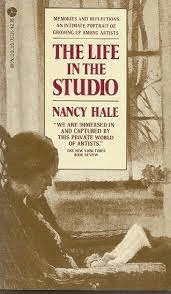
2. Library of America has rediscovered Nancy Hale in recent years, publishing her novel The Prodigal Women and a collection of her brilliant short stories. I strongly recommend Nancy Hale’s two charming out-of-print memoirs, A New England Girlhood, which delineates her unique childhood as the daughter of two artists, and Life in the Studio, a memoir of her parents inspired by the relics she found while clearing out their studios after their deaths.
Life in the Studio is my favorite: Hale and her mother comically disagree about many subjects, including fashion. In 1928 Lilian wore a new black cape to Nancy’s wedding to protect her wedding outfit, and Nancy despised it. Nancy felt that “if one was not wearing Chanel, pearls, a felt helmet and a knee-length coat clutched together at the hip, one might as well be dead.” But Lilian saved garments forever, sometimes arranging them for her paintings, or making patchwork quilts – but she mostly wore them. Nancy despaired: she had learned from an editor at Vogue “that no woman should have more than three outfits in a wardrobe at a time–one on her back, one in the closet, and one at the cleaners.”
Hale was the first woman reporter for The New York Times and a frequent contributor of short stories and autobiographical pieces to The New Yorker. She was the daughter of two painters, Philip L. Hale and Lilian Westcott Hale; the granddaughter of Edward Everett Hale, author of The Man Without a Country; the great-niece of Harriet Beecher Stowe (Uncle Tom’s Cabin) and Lucretia Peabody Hale (The Peterkin Papers); and a descendant of Nathan Hale.
3. Another book I’d dearly love to see back in print is Gladys Taber’s autobiographical novel, Mrs. Daffodil. The kind, witty heroine, Mrs. Daffodil, is almost Taber’s twin: she lives in the country with her widowed friend, Kay, and they raise children, dogs, cats, a pheasant, and a baby blue jay. Mrs. Daffodil, a writer, happily churns out a syndicated column called “Butternut Wisdom” and romantic short stories about young love, because readers are not interested in what she knows about, i.e., middle-aged widows. Mrs. Daffodil has a weight problem because she loves to try out magazine recipes that call for a pint of sour cream. When we first meet her she is having trouble zipping up a dress, and about to go on a diet. Fans of Taber’s Stillmeadow books will love this novel.
4. I am a great fan of Emily Kimbrough’s Forty Plus and Fancy-Free. Kimbrough is best known for Our Hearts Were Young and Gay, a hilarious travel memoir co-written with actress Cornelia Otis Skinner. But Kimbrough also had a solo writing career. In Forty Plus and Fancy-Free, Kimbrough, a fashion editor for The Ladies’ Home Journal , is trying to decide whether to travel to Italy with her friend, Sophy. Her employer agrees to give her a vacation if she covers the Coronation in England. I laughed hysterically over their Italian lessons at the Berlitz school, because who hasn’t had linguistic goof-ups? When a young man follows Sophy through the streets in Italy, she cows him by telling him she is a grandmother. And there are breathtaking descriptions of views and art, though usually with humorous comments.
5. How on earth can Alice Thomas Ellis’s classic humor books, Home Life, More Home Life, & Home Life Three, & Home Life Four be out-of-print? Ellis, a novelist, mother, editor,and a conservative Catholic, wrote these brilliant domestic columns originally for the Spectator. Home Life is vaguely like E. M. Delafield’s Provincial Lady, only urban, circa the 1980s. A white Persian cat is in the sink, so Ellis has difficulty brushing her teeth; a man mistakes her for a prostitute when she is in a bar with Beryl Bainbridge; she gets snowed in in the country; and the pipes burst and inundate a set of Thackeray.
What are your favorite out-of-print books? Informed minds want to know!